
Why Pancakes Turn Tough
A pancake can turn golden on both sides and still chew like bread. For a softer middle, start with the mixing bowl. One small test pancake will tell you what the rest of the batch needs.
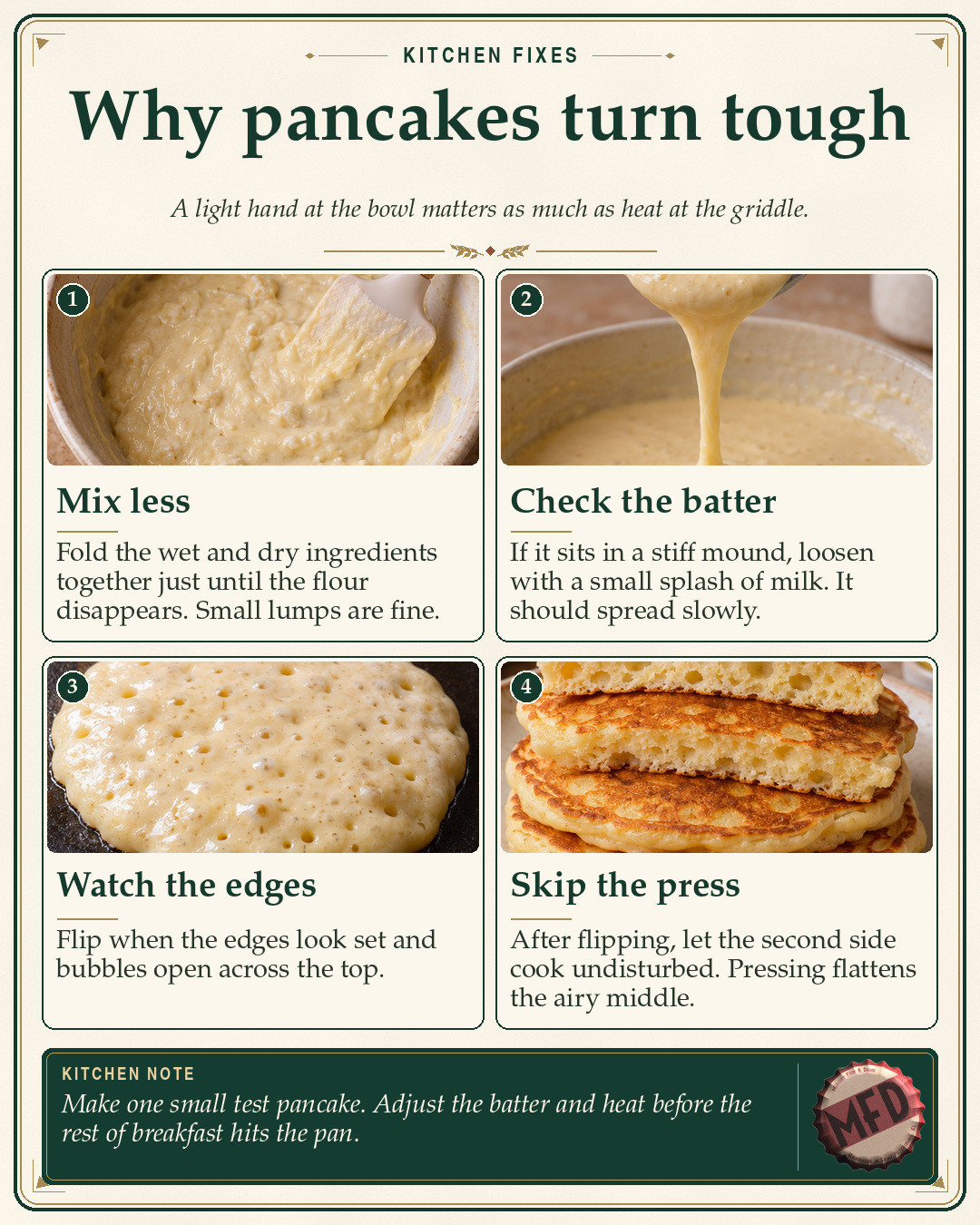
Mix less
Whisk the dry ingredients together first so the leavening is evenly distributed. Combine the wet ingredients separately, then fold wet into dry just until the last streaks of loose flour disappear. Small lumps can stay. Continued beating develops gluten and makes the pancakes springy.
Check the batter
Spoon a little batter onto a lightly greased griddle over medium heat. It should spread slowly into a round. If it sits in a stiff mound, fold in a teaspoon or two of milk and try again. If the bottom darkens while the middle is still wet, lower the heat.
Watch the edges
Look for a matte rim and bubbles that break and leave little holes on the surface. Lift an edge with a thin spatula. When the underside is golden and the pancake holds together, flip it once.
Skip the press
Let the second side cook undisturbed. Pressing with the spatula squeezes air out of the middle. Open the test pancake and check for a tender, cooked center before pouring the rest of the batch.