
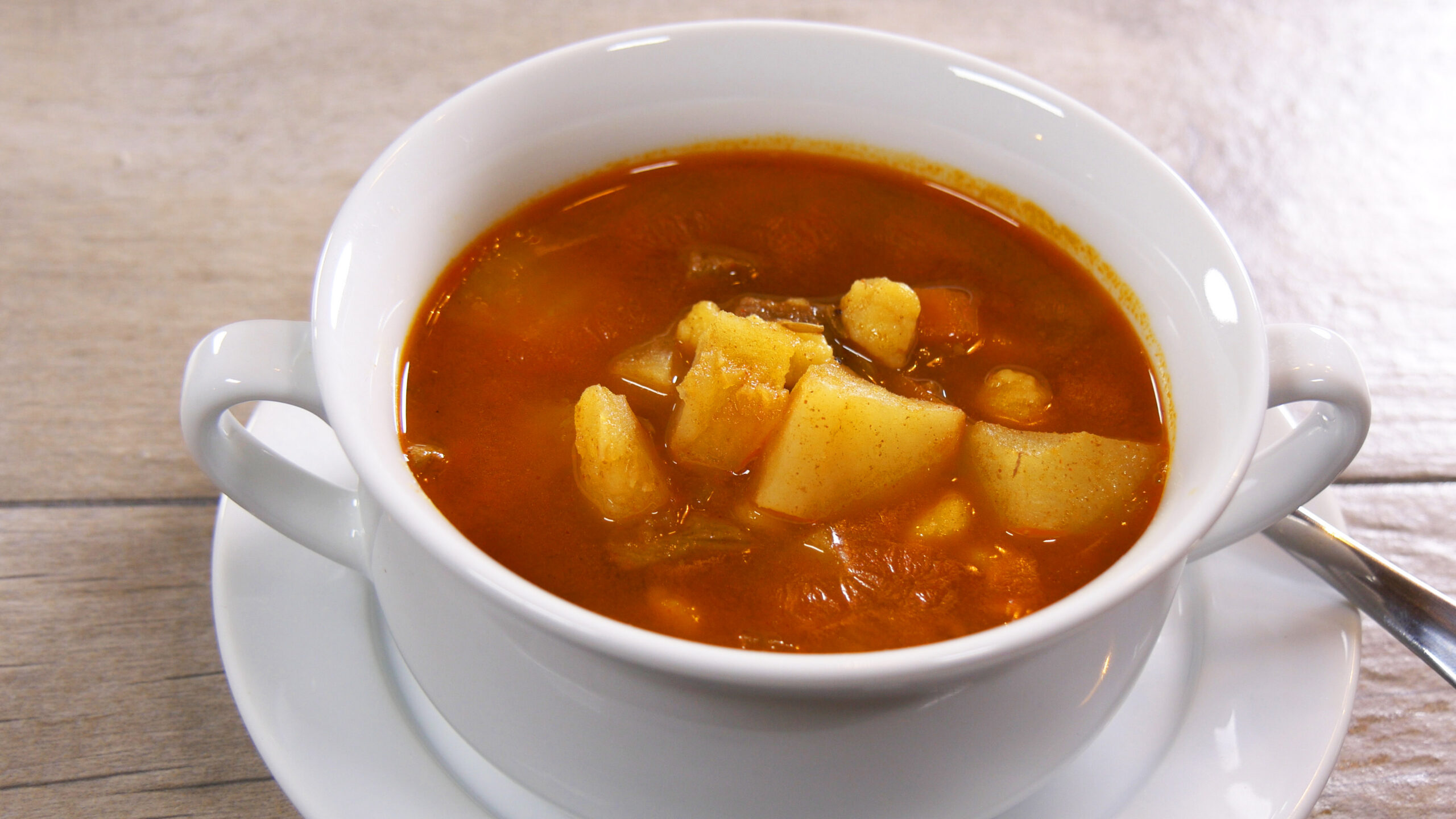
Hungarian Gulyas (Goulash)
Beef, potatoes, tomato and sweet peppers make this a generous bowl of paprika-seasoned gulyás. Csipetke noodles go in near the end. Use beef stock for a richer broth or water, as the recipe allows, and give the beef the time it needs to become tender.
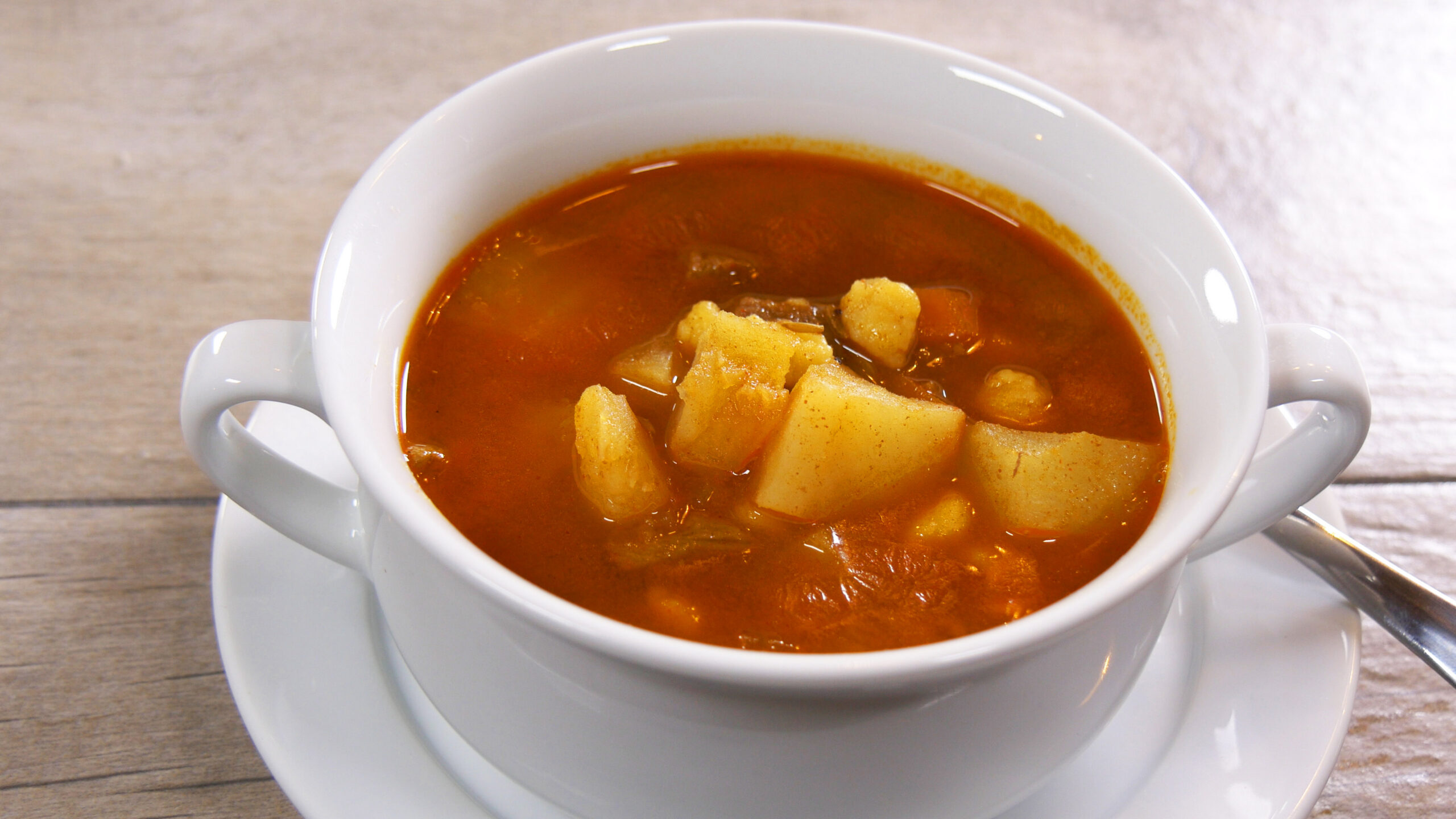
Hungarian Gulyas (Goulash)
Ingredients
Method
- In a large Dutch oven or heavy pot, heat the oil over medium heat. Add the diced onion and cook, stirring frequently with a wooden spoon, until the onion begins to soften, about 2 to 3 minutes. Remove from the heat and stir in the paprika. Mix well, then add a little of the measured beef stock or water and return to a simmer for a few minutes. Add more of the measured liquid as needed to prevent the mixture from drying out and to create a sauce.
- Add the meat, salt, pepper, caraway seeds and bay leaves. Then add the diced tomato and sweet yellow Hungarian peppers. Stir to coat everything with the sauce, bring to a boil, then cover and simmer on medium-low heat, stirring occasionally, for one hour.
- Add the potatoes, carrot and mashed garlic. Continue cooking for an additional 30 minutes, or until the meat is tender and the potatoes and carrot are cooked through. The longer you cook this on low, the more tender the stew meat will become.
- Once the meat is fork-tender, nearly falling apart, add the remaining beef stock or water from the measured 4 cups. Bring the goulash back to a boil and add the csipetke noodles. Cook until the noodles float to the top and are cooked through, approximately five minutes. Serve with hearty bread, a dollop of sour cream or pogacsa.
Notes
Tried this recipe?
Let us know how it was!Cooking notes
Treat the clock as a guide. The cut of beef and the size of the cubes affect the simmering time. Check the beef before moving on to the potatoes; allow longer if it is still firm.
Follow the liquid additions. The four cups of stock or water are the total for the recipe, added in stages. Keep track of what you have used so you do not add four more cups at the final step.
Before serving. Remove the bay leaves and taste the finished broth before adding more salt, especially if you used salted stock.
What to cook next
Make it your own
Tried a variation, have a question or spotted something we should clarify? Tell us what happened in your kitchen.


